
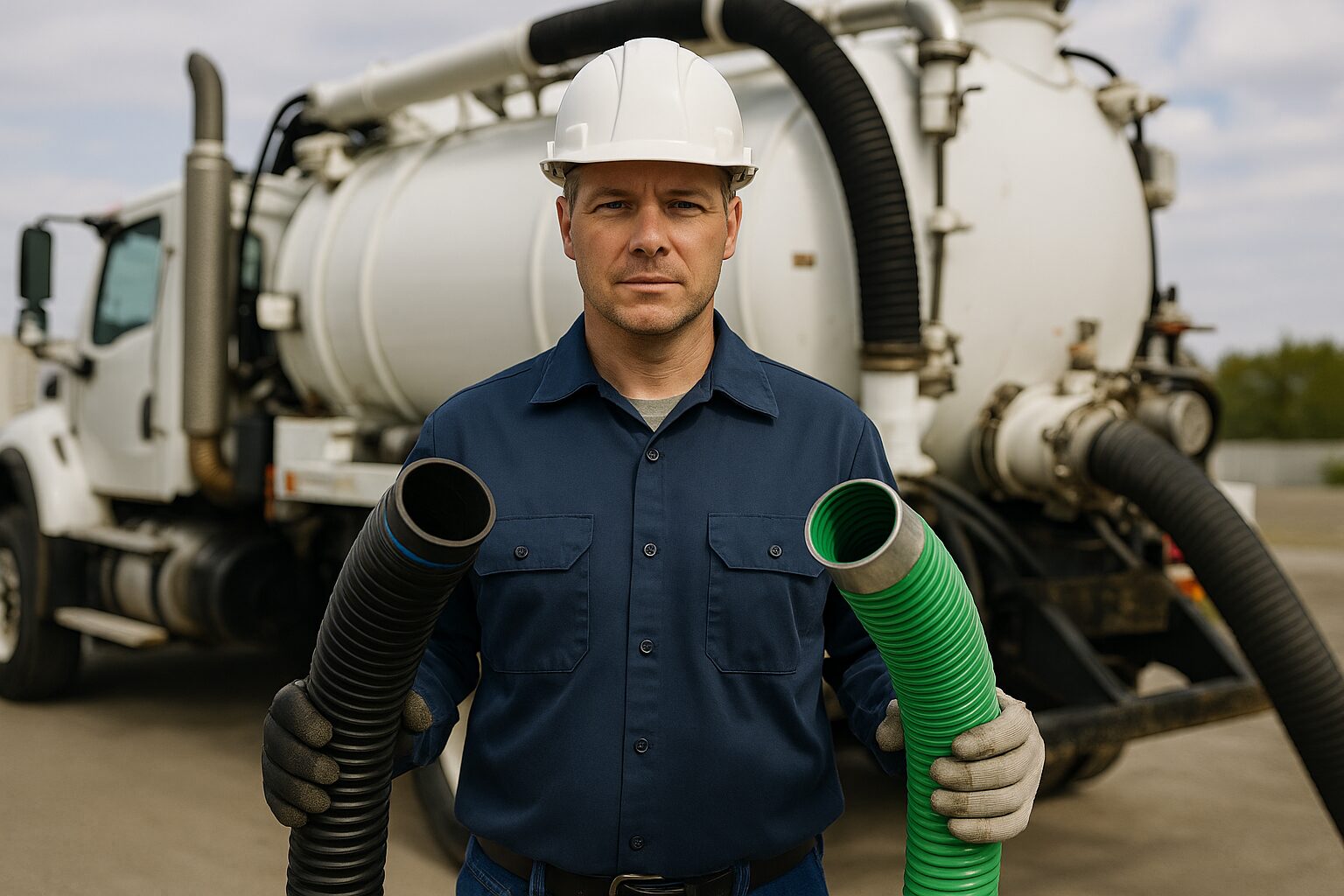
Why Hydrovac Hose Selection Matters
Choosing the right hydrovac hose is essential for job performance, operator safety, and equipment longevity. Whether you’re operating a vacuum truck, excavating utility lines, or clearing debris, proper hydrovac hose selection ensures maximum suction and minimal downtime.
1. Understand the Jobsite Conditions
Each project demands a different hose. Wet excavation, dry material pickup, and abrasive soil all put unique stress on your hydrovac system. For example, a boom hose used for lifting light debris isn’t built for high-abrasion trenching work. That’s why precise hydrovac hose selection is crucial.
2. Material & Abrasion Resistance
Most hydrovac hoses are made of rubber, polyurethane, or a blend. Polyurethane offers greater abrasion resistance and a longer lifespan but can be stiffer. Rubber is flexible and great for cold environments. The right choice depends on what materials you’re moving and under what conditions.
3. Diameter and Flexibility
Smaller diameters like 6” are ideal for precision work and tighter areas, while 8” hoses are best for high-volume jobs. Flexibility matters too—especially if you’re using hose reels or navigating bends.
4. Boom Hose vs. Dig Tube: Know the Difference
-
Boom hoses: More flexible, designed to move with the vacuum arm.
-
Dig tubes: Rigid, straight sections used for ground contact and heavy-duty suction.
Mixing these up can lead to breakdowns or reduced efficiency.
5. Fitting Compatibility
Your hydrovac hose is only as strong as its connection. Use aluminum or stainless-steel couplings, and make sure they match your system specs. Faulty fittings can lead to blowouts or suction loss.
6. When to Replace Your Hose
Signs it’s time to replace your hydrovac hose:
-
Cracks or bubbles in the lining
-
Flattened or collapsed areas
-
Decreased suction
-
Leaking fittings
Faultless Hydrovac Hose Solutions
At Faultless Solutions, we offer expert guidance in hydrovac hose selection across Ontario and Eastern Canada. Our inventory includes boom hoses, dig tubes, nozzles, and custom fittings, backed by ISO 9001 certification and same-day delivery options.
📞 Need help with your next hose setup? Contact us today for a consultation.
Comments are closed.